
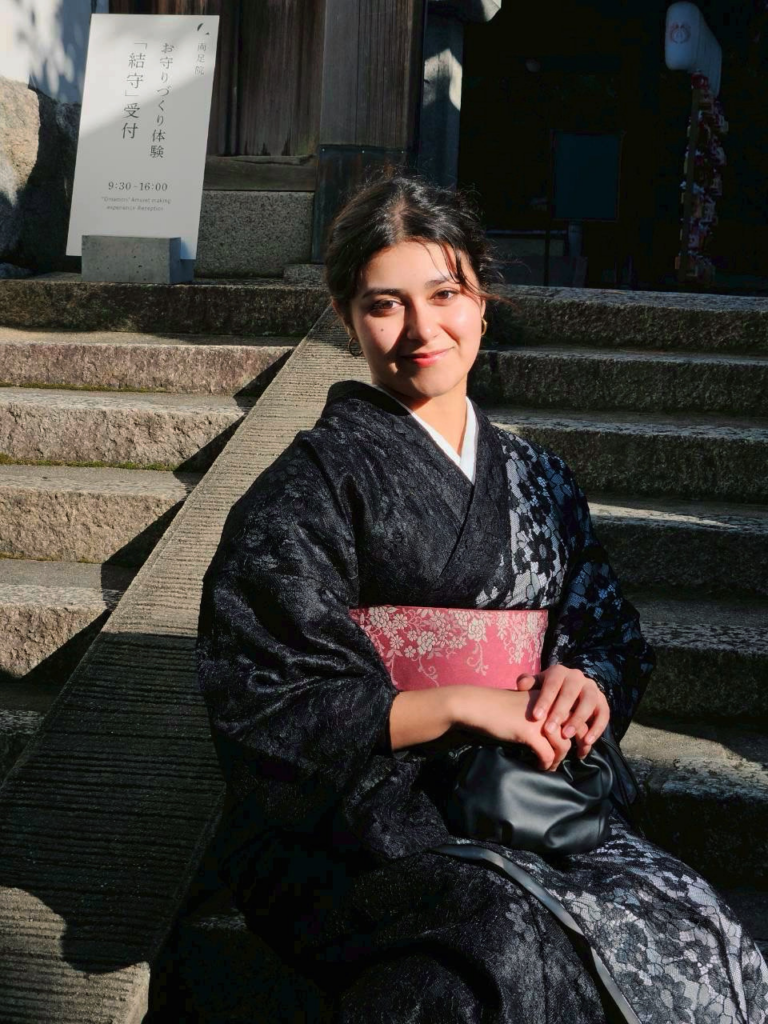
Emma Cohen
2024-2025 Tanaka & Green Scholar
When I first landed in Japan, I had no idea what to expect. What would my life look like for the next 2 years? I didn’t have much time to worry about it, since as soon as I moved into my dorm in Kyoto, the paperwork began. Between trips to the ward office, insurance forms, opening a bank account, and getting a phone number, the paperwork alone made it clear my life in Japan had officially begun.
My first semester at Ritsumeikan University consisted of classes on International Relations and an incredibly intense Japanese class. As I had taken a break from learning the language over a long summer, it was a rough start –spending hours everyday hunched over a textbook and struggling with grammar rules– but it did create a strong baseline for my Japanese.
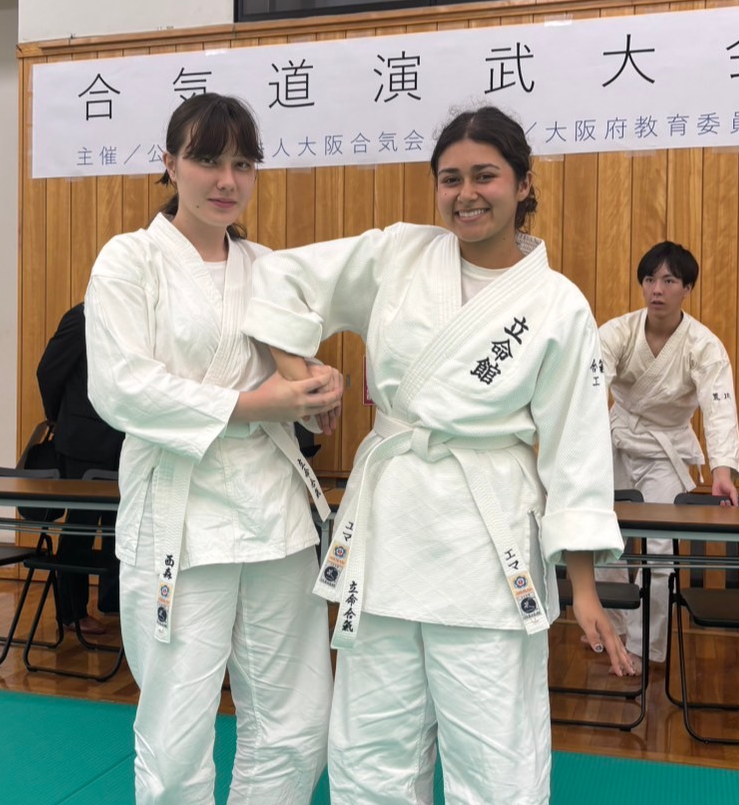
In the second semester, I ended up joining the Ritsumeikan University Aikido team. Aikido (合氣道) is a Japanese martial art that focuses on redirecting your opponents energy and forcing them onto the ground. I had practiced Aikido for a few years in the past, and moving to Japan rekindled my interest in the sport.
I was the only international student on a team of around 30 students with only two others who could speak English. At first it was difficult. With four practices a week entirely in Japanese, I had to learn through watching and mimicking others. This taught me how to read a room, adapt to different communication styles and how to build relationships with people even with a small grasp of the language.
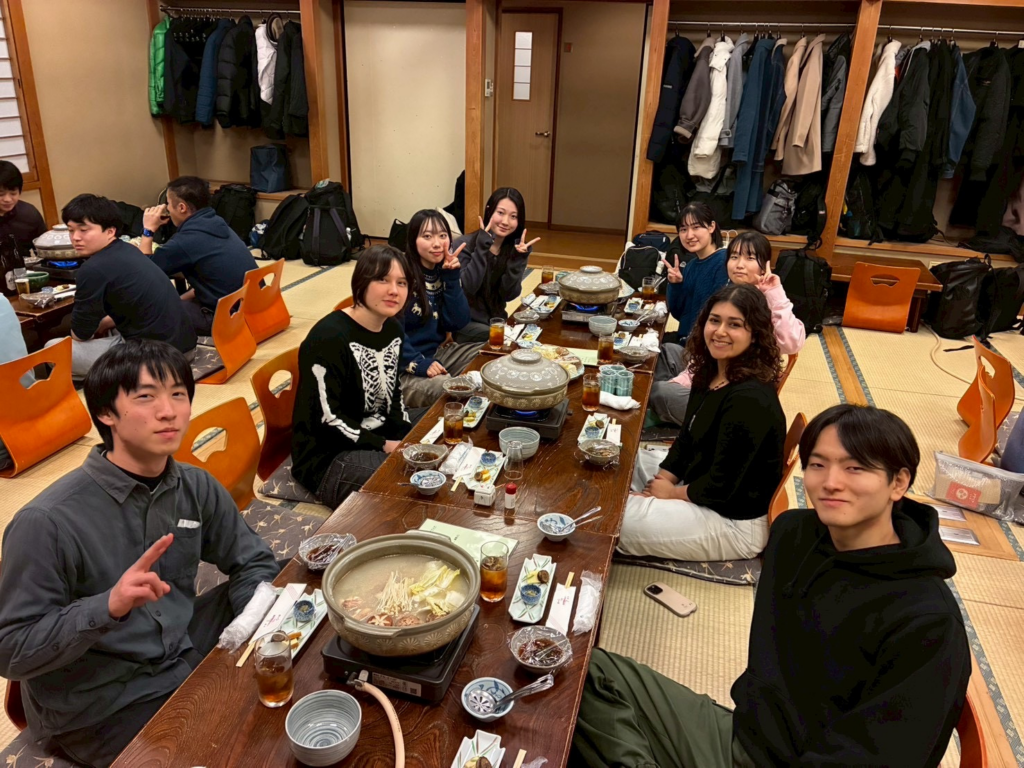
In the winter, we had Gasshuku (合宿)or training camp, where my team and I traveled to the mountains of Hyogo and had four days of intensive training. While training was important, with eight hour practices for three days in a row, the socializing, games, jokes, and eating with friends were just as memorable. I learned about local foods and games and got experience on how Japanese university students spend time together. Despite coming from a completely different cultural background, I was able to have fun and enjoy spending time with my teammates.
The following year, when new students joined the Aikido team, I became an upperclassman and was expected to teach the beginners just as my senpai had taught me. Coming from the US, where relationships are generally less hierarchical, learning to switch from being kohai (underclassman) to a senpai was a unique experience. It challenged me to adjust the way I communicated and taught others while taking on new responsibilities.
Alongside the Aikido team, I also had two jobs. The first was tutoring a 12-year-old Japanese boy named Ryu. His grandmother grew up in St. Louis, but he had lived his entire life in Japan, and needed to improve his English. We worked on creative writing and description skills twice a week for an hour and a half per session. It was wonderful to see his English skills improve over time. I had to learn how to help my student embrace his creativity, and think independently, something that he struggled with due to the Japanese education system.
The other job I had was at a high-end Kaiseki Omakase restaurant in Gion. I worked directly alongside the chef, who had over 20 years of experience. My responsibilities included translating between international guests, memorizing their orders, explaining eight course menus and serving drinks. At the same time, I had to prepare and predict what the chef needed, all while holding multiple conversations.
This job taught me valuable communication skills that will be important for networking and my current internship organizing events for embassies in DC. As someone who hopes to work in the State Department, I believe it is important to learn how to communicate effectively with people from many different cultures and backgrounds.
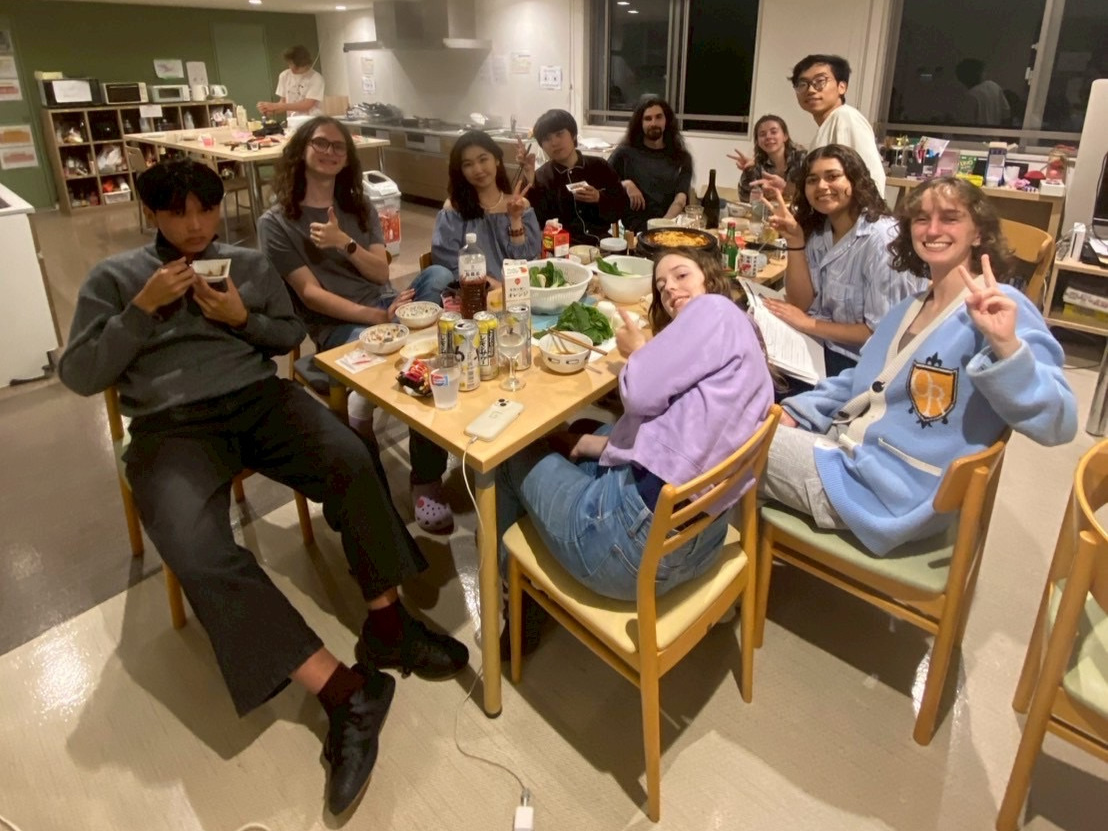
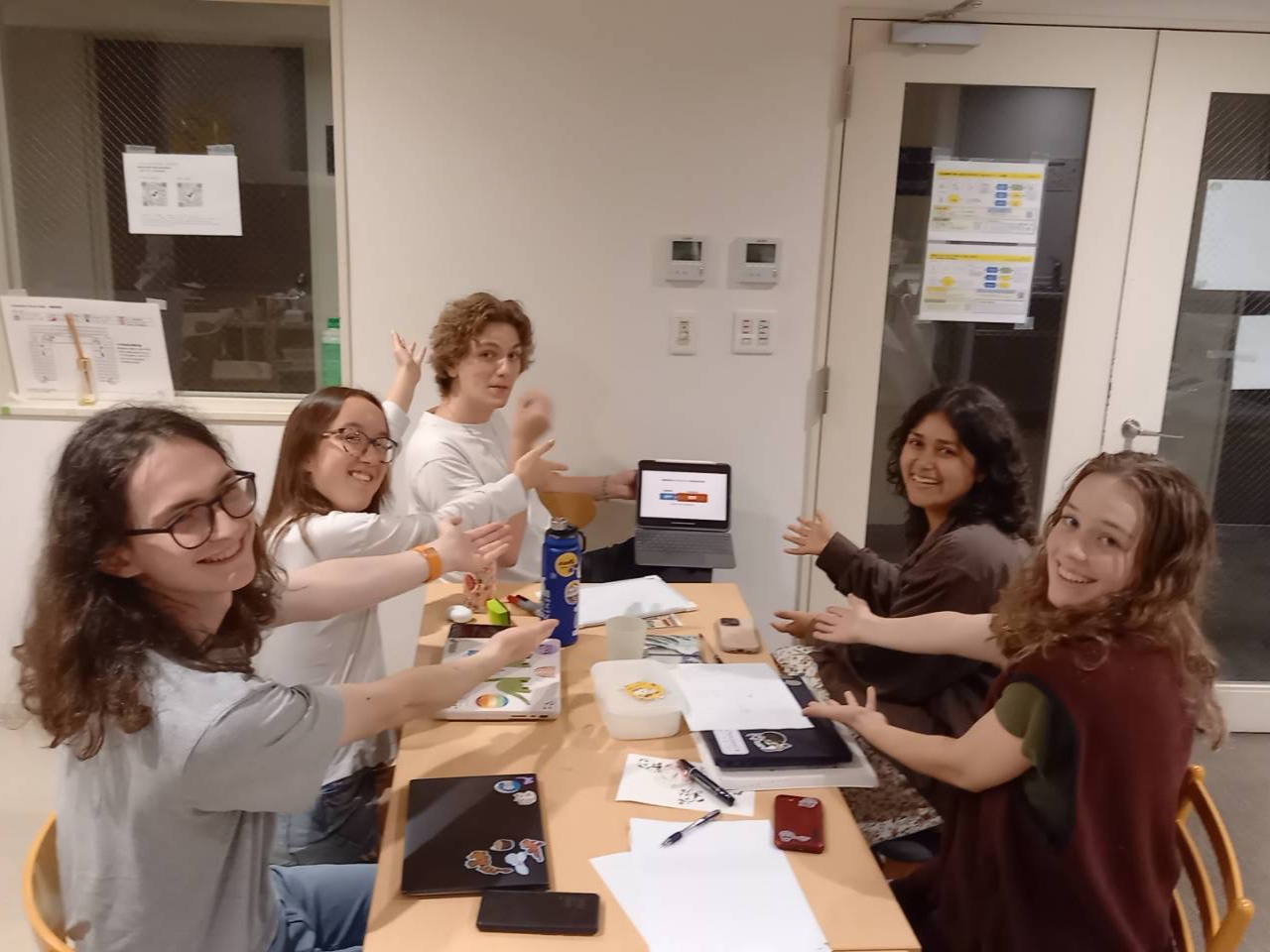
My second year in Japan continued the same pattern. I was extremely busy as a full time International Relations student with eight classes, two jobs and a full-time college athlete, all while studying Japanese on the side. However, when I had free time, I was able to experience things such as traveling to China for a week, volunteering at a peach farm in the countryside of Wakayama, and visiting Thailand.
A month before I left Japan, I was invited to a United Nations program in Hiroshima where I learned about nuclear proliferation. This deepened my interest in nuclear-related policy and inspired me to study more about the US foreign policy in the Pacific, particularly the US nuclear umbrella and its military relationships with Japan, China and both Koreas.
My time in Japan not only improved my language skills, and deepened my understanding of Japanese culture, but also gave me lifelong friendships and taught me more about my own identity as a Colombian American. Being immersed in another culture forces you to reflect on your own, and to question your habits, giving you an opportunity to grow as a person by adding new aspects to your existing identity. Now that I’m back in the US, I plan to continue my studies in International Relations and Japanese, and have even found dojos to practice Aikido in DC during the school year and my hometown during breaks! My two years in Japan have changed the way I see both the world and myself, and I hope to carry those lessons with me into my future studies and career.
Must check - WP faq support by geometricbox