
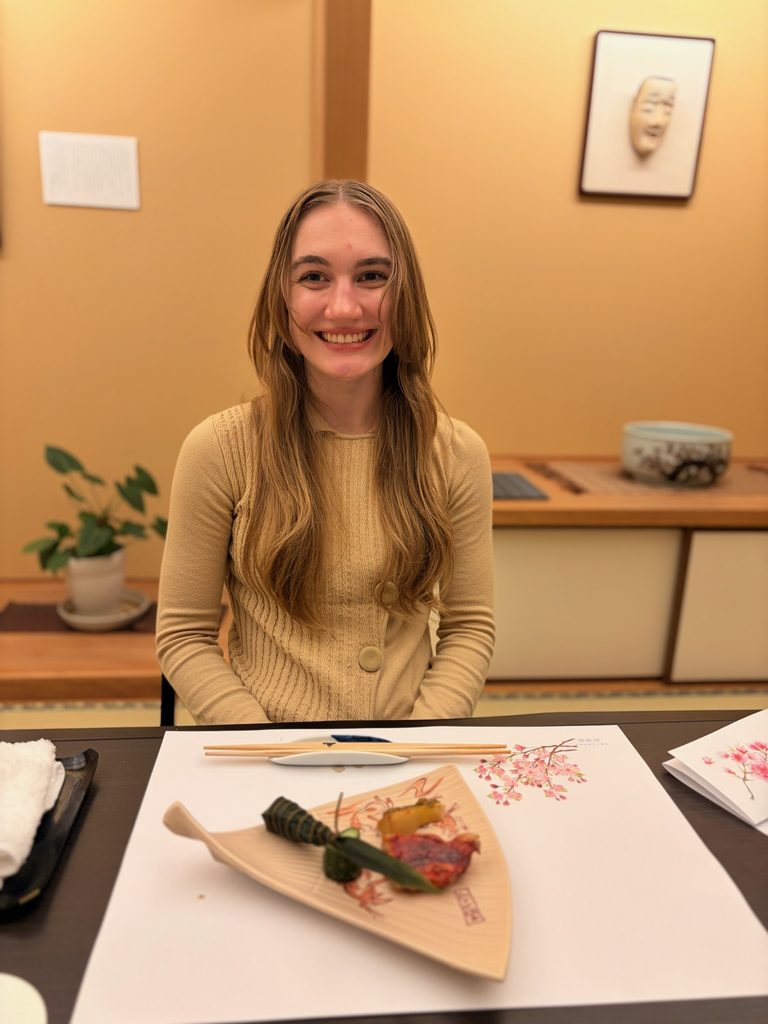
My Year in Yokohama
Keira Burger
2025-2026 Tanaka & Green Scholar
The accumulated sweat on my palms made trudging my oversized luggage through the maze of another mall a formidable task. In the treacherous humidity of August, I was completely lost on my way to the dorms. Lost and determined: such words marked my first day in Japan.
By the end of my year abroad, when I once again trudged that luggage in the returning heat, that sense of disorientation hadn’t entirely vanished. It had only been redirected in the most meaningful way possible. It was a fact made evident in the emptiness of my right hand, with that second suitcase relocated to that of my friend’s who helped me lug it to the airport.
Yokohama graciously re-introduced Japan to me in this manner, and it was not long before Meiji Gakuin University broadened this image. I learned beside and about the international and local students I attended class with, and took advantage of the cultural exploration programs, where I participated in kimono dressings, tea ceremonies, and calligraphy classes. I honored my double major in Sociology and International Studies in selecting academic courses that focused on Japanese society, culture, politics, and international law, fervently searching for a deeper understanding of Japan’s place in the global community and how Japanese people themselves understand their nation and society.
Through academic projects, my more niche interests shone, and I am thankful for the opportunity to explore challenges facing Japanese youth, including truancy, marginalized runaways, and the larger epidemic of loneliness. I dug deeper into the grassroots organizations that commit to mobilize against these issues, efforts that have left deep impressions on me, and equipped me with questions I would probe in my own community upon returning home.
Language, however, was an animal I never expected to consume so much of academic and personal life. I will never forget the headache after my first Japanese class at MGU. Having only completed an intensive eight-week beginner course through CLS, I was shocked to be placed in the pre-intermediate class. Taught entirely in Japanese, the first day left me struggling to understand much of anything. Though by the first class of my second semester, that headache was gone. I had understood nearly everything and only wanted to push myself further. I joined my school’s buddy program, where I made Japanese friends eager to connect with international students while still learning English. Speaking Japanese together gave us a way to connect in both directions.
While my Japanese skills could still use some serious work, these interactions continue to motivate me in my language journey, with real people at its center.
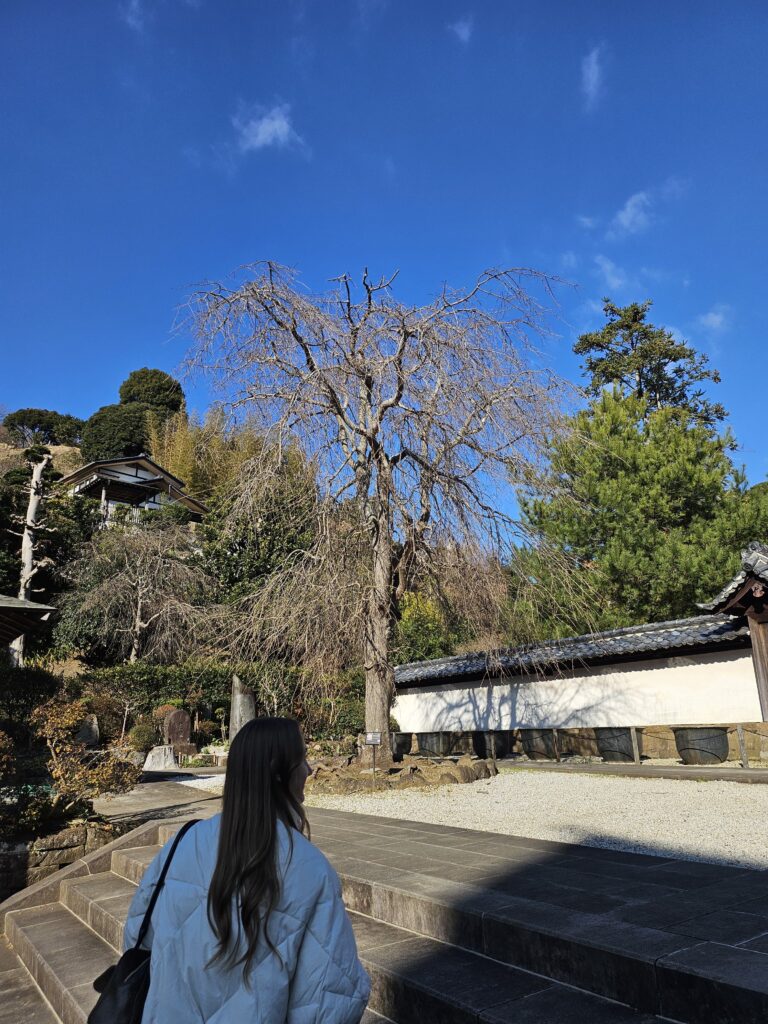
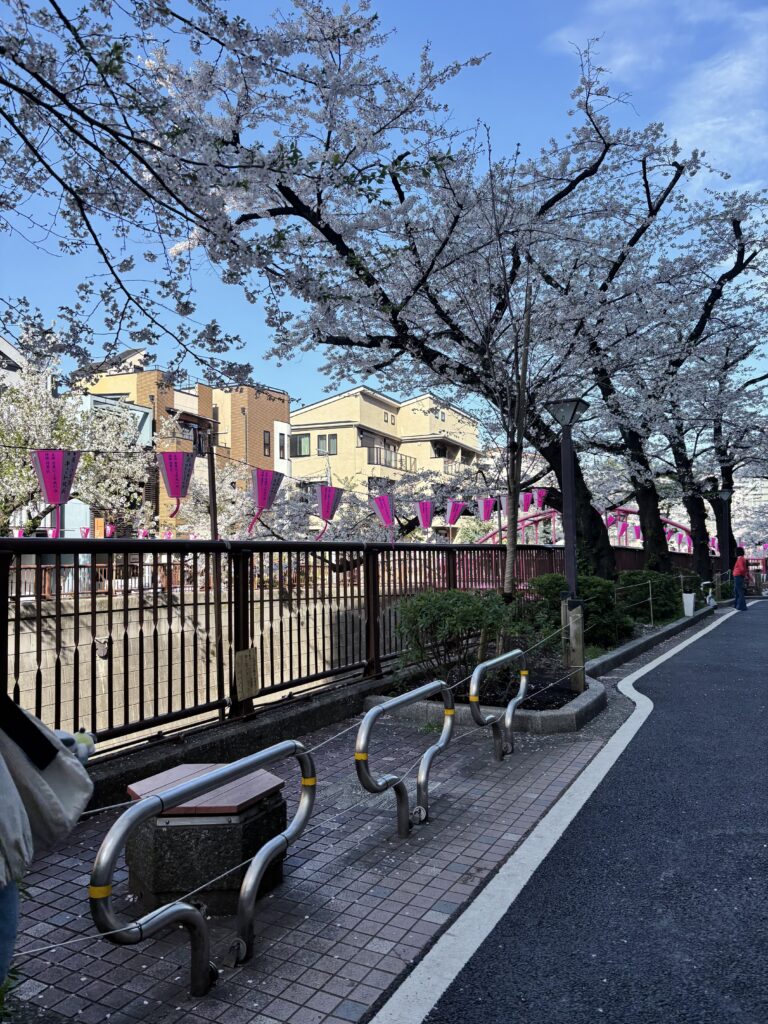
Following it led me traveling, as I returned to Hiroshima to visit the peace park and to Shizuoka during cherry blossom season. I found quiet parts in the buzz of Tokyo and read on the packed, silent trains. The fondest of my travels were local, though, embedded within the routines of daily life as a student in Totsuka, Yokohama.
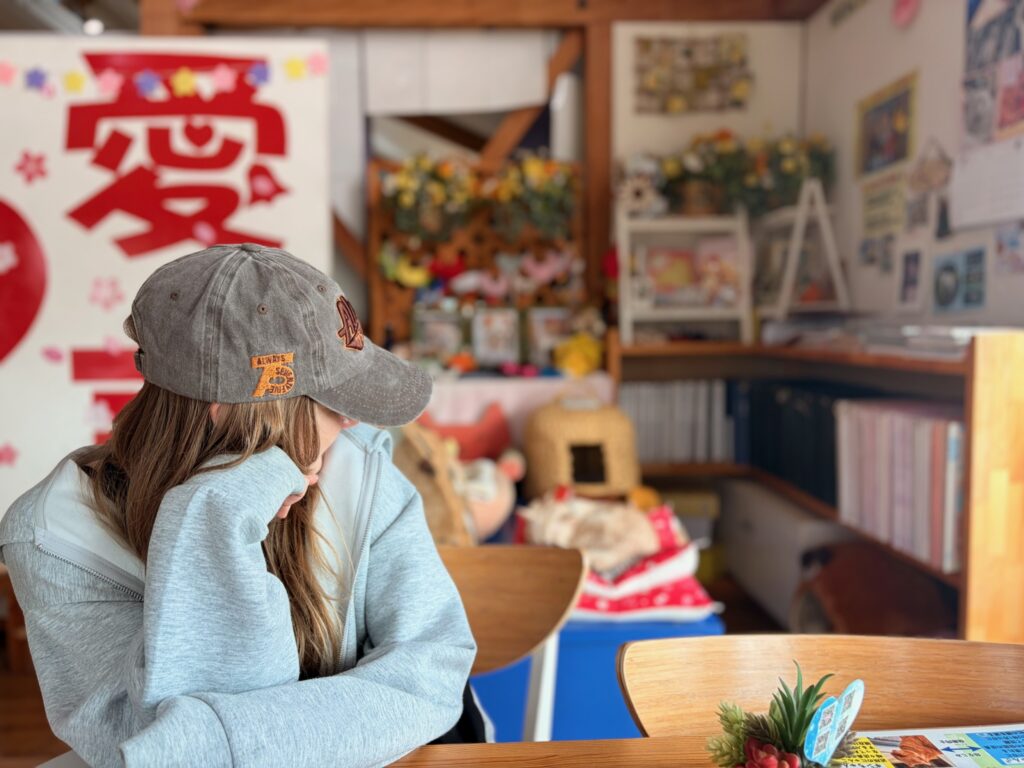
I remember vividly the conversations in our most frequented izakaya, where our seats looked no different than tin cans, and where everyone became fluent in English and Japanese for a few hours.
“Do you know where New York is?” It was rare people had heard of Maryland, so I would try to explain my origins as such, “It’s south from there, near the middle of the east coast.”
As time passed, as the question became expected, I got better at this simple explanation in a language I’d scrambled to get a foot in. But I’ve embraced the scramble, the disorientation, the chaos of finding routine, as it pointed me toward a future where I can see myself a part, one in which Japanese people hold a place.
Looking forward, I intend to strengthen the connection between the most local parts of America to Japan, and to the rest of the world. I want to encourage Americans to explore beyond national and state borders, broadening their perspectives while sharing America’s diversity with the world. I hope to make travel and human connection abroad more accessible to marginalized communities by supporting stability in their lives and challenging the policies that make these opportunities feel out of reach.
I am ever grateful for the support of my family, new friends, Washington College, the Critical Language Scholarship program, and of course, the Tanaka and Green Scholarship Program for making possible this unforgettable year in Japan.

Must check - WP faq support by geometricbox